

Computers have become an integral part of people’s lives nowadays; however, the creation of modern computers took centuries of experimentation. Long before people came up with their laptops and cell phones, there was the invention of a similar type of equipment to the calculator that could perform computations, keep records, and automate calculations. It is quite evident that the evolution of mechanical calculators brought about programmable calculators and computers.
It is important to know the history of computer technology to understand how technology evolved and how various innovations have impacted human life.
The history of computers is all about the development of technology and machinery that was used for computations, data processing, data storage, and execution of instructions.
The computer's evolution was not based on any one particular invention, but rather the work of engineers, mathematicians, and inventors who used previously developed ideas and introduced new changes in terms of speed, reliability, memory capacity, size, programming, or availability.
The story starts with inventions that make mathematical calculations simpler. Among the oldest calculators invented is the abacus, which has been in existence for hundreds of years in various forms. The device does not perform any automatic calculations but makes it easier to represent figures mathematically.
In the seventeenth century, the use of mechanical calculators took an advanced turn. Blaise Pascal came up with the Pascaline, which is a mechanical calculator that performs simple additions and subtractions. The next development came when Gottfried Wilhelm Leibniz invented the Stepped Reckoner.
These machines showed that it is possible to assist with mathematical calculations using mechanisms.
Among the many important contributors to the computer invention history is Charles Babbage, who invented the Difference Engine in the nineteenth century for the automation of mathematical table calculations.
Subsequently, Babbage came up with the concept of the Analytical Engine, which was even more sophisticated than his previous creation, as it included the mechanism that would resemble the processor, memory, input, and output mechanisms of a modern-day computer.
Though the whole device wasn't actually built before Babbage died, the idea of it had brought some of the concepts of programmable computing. Also, another very important contribution to the development of computer invention history was made by Ada Lovelace, who came up with an algorithm for the machine.
Also Check: Future Inventions That May Redefine How People Live Soon
During the late nineteenth century and early twentieth century, punched cards served as a means of representing and processing information. Herman Hollerith devised a punched card tabulation system to process information from the 1890 U.S. census.
The system utilized holes on punched cards as a way of representing information and was efficient in the processing of data compared to manual processing techniques. Hollerith's company later became part of the business that eventually developed into IBM.
Punched card technology played a significant role in establishing the concept of machine representation of information.
There is no definite answer to this question because different computers brought about different features that characterized present-day computing.
The Zuse Z3, built in 1941 by a German engineer, Konrad Zuse, is considered to be one of the first programmable, automatic digital computers ever. It was equipped with electromechanical relays and performed calculations under programmed commands.
There are also other computers that are important according to the definition one uses. The Atanasoff-Berry Computer presented electronic digital calculation concepts, whereas Colossus machines developed by the British were used for cracking codes during the Second World War.
ENIAC, completed in 1945, became one of the earliest large-scale general-purpose electronic digital computers. It was equipped with thousands of vacuum tubes and took up much space.
Consequently, one should speak of achievements in computing rather than of one certain computer.
The first electronic computers were developed in the 1940s and 1950s. These computers utilized a lot of vacuum tubes for processing purposes.
Compared to mechanical computers, they were much faster; however, they had several significant drawbacks. Vacuum tubes required lots of energy, produced lots of heat, and could burn out quite often. The computers themselves were very large and costly.
Programming them could be quite challenging, as programmers had to use machine code or even physical layouts of computer systems. Nevertheless, electronic computers became the basis of modern computing systems.
The development and use of the transistor revolutionized the history of computer development. Transistors were capable of performing some of the operations performed by the vacuum tube, although they were much smaller, more efficient, and more reliable.
Since the 1950s, the computer has been increasingly using transistors. This made the system small and efficient. The transistor also contributed to the diffusion of computers from very specific scientific and military applications to commercial and business uses.
The subsequent development involved the use of integrated circuits. Rather than different components doing different things electronically, different components could now be put on the same semiconductor chip.
This development also assisted in decreasing the cost and the size of computers while increasing their effectiveness. With the development of integrated circuit technology, an increasing number of components were placed in increasingly small chips until there were millions of components being placed.
This was an important period in the history of computers.
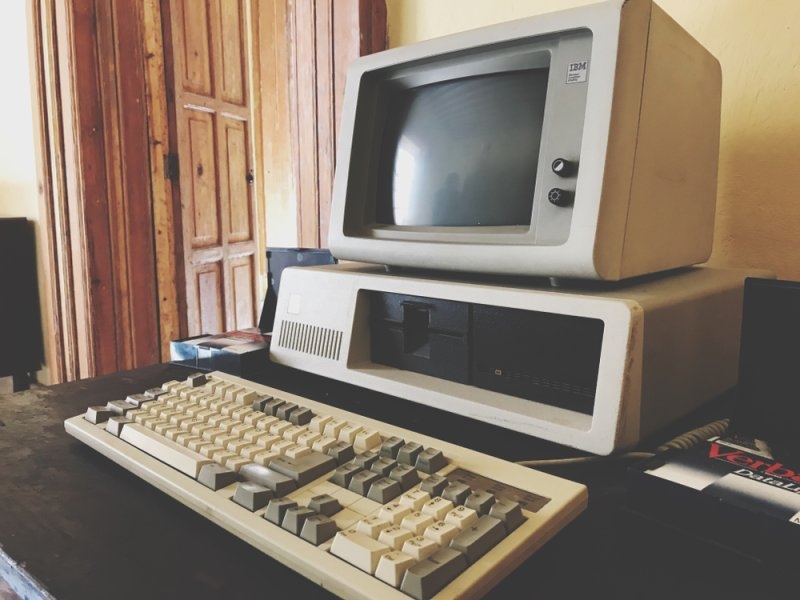
During the 1970s and 1980s, developments in microprocessors enabled the creation of personal computers. The microprocessor brought all processing activities to one chip, which helped to reduce the size of the computer.
Apple, IBM, and Microsoft were some of the companies that led the way towards personal computing. Computers were not confined only to laboratories but were found in offices, homes, and schools.
User-friendly interfaces, keyboards, monitors, storage facilities, and software made it easy to use computers. The personal computer changed the way people write, organize information, create graphics, calculate, and communicate.
The development and popularity of the internet have seen another step in the progression of computers. It is no longer a device that operates in isolation since there is the ability of computers to exchange information through networks.
The internet became more accessible through the World Wide Web. Computing has advanced even further with the advent of email, search engines, websites, e-commerce, and other media.
Computers also became more mobile because of improved laptops and wireless networking.
Modern computing has moved far from conventional desktop computers. Modern smartphones contain advanced processors, memory, cameras, sensors, communication, and software technology in one unit.
On the other hand, cloud computing enables individuals and firms to gain access to computation, applications, and memory through an online computing system. There is no need for having everything locally available to the user.
These advances have taken computing to new levels compared to what was ever possible before.
Artificial intelligence has become another phase in the development of computers. Today's computers can analyze large sets of data, detect patterns, understand languages, produce content, and perform other tasks.
The future of computing will probably include further developments in processing, specific chips, quantum computing studies, robotics, artificial intelligence, and Internet-of-things devices.
Nevertheless, the basic idea has remained unchanged from previous generations of programmable machines; computers take information, follow directions or models, analyze data, and produce useful output.
You may also like: How Artificial Islands Are Made & Their Impact on Innovation
The history of computers is a story of gradual transformation rather than one isolated invention. This is because every step from the abacus and calculators to programmable calculators, electronic computers, personal computers, mobile phones, and cloud computing was a development from something that came before.
This means that the definition of what a computer is will determine what the first computer was. In addition, the history of computer inventions will show just how far computing has come in such a short time.
There is no single individual credited with inventing the modern computer. There have been many people, such as Charles Babbage, Ada Lovelace, Konrad Zuse, and Alan Turing, among others, who have made valuable contributions to computing.
The main reason for the invention of computers was to facilitate computations, manipulate huge volumes of data, solve scientific problems, and carry out specialized military or government-related tasks.
Home computers started to become more and more common in the late 1970s and particularly during the 1980s and 1990s.
Computers became smaller through advances including transistors, integrated circuits, microprocessors, and increasingly compact semiconductor technology.
The internet transformed computers from largely standalone machines into connected systems used for communication, information sharing, online services, collaboration, entertainment, and cloud-based applications.
This content was created by AI