

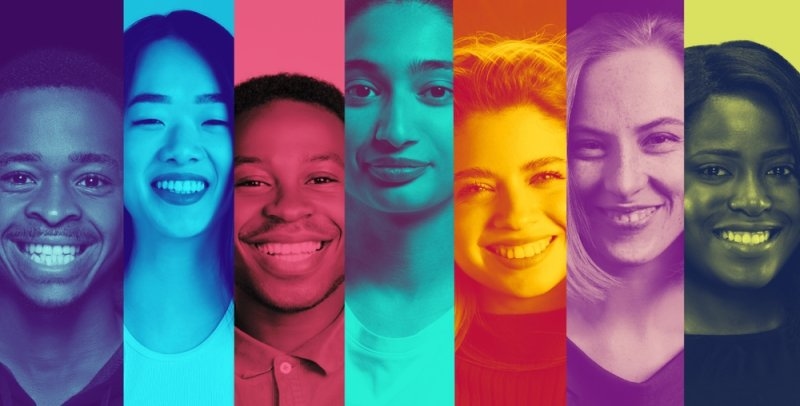
Each society is composed of many individual people. When those people are from different cultures, backgrounds, and languages, each with different traditions, a vibrant, diverse society grows. Not only is diversity a social construct, but it also has positive effects on the learning environment, workplace, and surrounding neighborhoods. A diverse society brings learning, relationships, and opportunities to each member.
When individuals mix, they learn a wider variety of knowledge. This allows each person to become less confined by their own perspective of the world and learn new ones. Let’s explore more:
Ethnic diversity is a valuable lesson that can and should be learned by members of a community. When people spend time with those of a diverse background, they learn more than simply what is taught in textbooks and in the formal setting of school. They gain a different perspective from people they meet day to day that they cannot learn from any other source. Exposure to different ideas can expand their worldview and help break down barriers of assumption.
Children in a multicultural society, or those attending school in such a society, can learn a great deal of cultural knowledge early on. Through friendships and the experiences they encounter on a day-to-day basis, children gain cultural knowledge about different people's customs, traditions, and ways of life that prepare them for a society that continues to expand across global borders.
When differing ideas are brought together, innovation arises. Cultural diversity, in the form of the different ideas people hold, encourages these differences. By viewing the world from different points of reference and seeing the same challenges from all different angles, people can develop more unique, effective ways to approach them. Businesses will learn more quickly, and the rate of progress can grow as different people's views, traditions, and customs come into play.
When people come together to work as groups to solve a problem, there are several benefits to having people of different backgrounds participate. Different experiences help people see problems in different ways, which reduces the opportunity of a single-mindedness that will lead the group in the wrong direction. When thinking about a certain idea or situation, the input that different people have to give because of their different backgrounds can result in a much more concrete and efficient conclusion.
There are many ways that diversity strengthens a community's economy. The ability to connect with people in different customer groups because of cultural connections, and thus provide different products, services, and marketing. A community's strength lies within its population. Entrepreneurs, skilled people, and those with particular types of experiences all come to live in diverse communities to gain their experience. They are a key factor in helping grow a local economy, bring new business into communities, and support its long-term stability and growth. Diversity has led to people having better connections in their own countries and also across borders.
A nation's culture is what makes the country's people. The ethnic diversity that a community provides is important for carrying culture forward and protecting future traditions that might otherwise be lost to those in smaller populations or cultures whose way of life depends more upon individual populations. This can include traditions, songs, art, and the stories told over many generations. Celebrations that allow for each community's specific cultures and traditions to be put on public display teach others about who they are, and help keep alive the importance of each culture. It creates room to celebrate each unique culture.
One of the things that culture celebrates is its traditions, such as through music, food, and performances. When these celebrations are hosted, and all people of all backgrounds within a community are welcomed and encouraged to attend, these people learn to appreciate other people's cultures better and build community through mutual experiences and exposure.
One of the ways that a community supports itself is through the love and appreciation that it shows its members. Tolerance is achieved when people show compassion and understand those of other people's cultures, so long as the cultures themselves aren't harming others. Through experiencing many people's cultures, the members of a community develop a greater capacity for these two traits and thus strengthen the bonds of their society. They begin to notice that people from various backgrounds are quite alike, as people often agree on things such as having strong families and being kind to others. This helps bring together differing cultures and creates greater unity and understanding amongst communities.
Today's society is becoming more and more globalized. Businesses have companies that work across national borders. When people interact with a diverse population within a community, they begin to gain valuable experiences that make them well-suited to survive and thrive in the complex worlds that are emerging today. Learning about different cultures also allows the society in question to be a welcoming environment where people are not afraid of those who are different, but view them as equals and potential friends. These communities often grow together while retaining their unique characteristics.
Communities are only strong when everyone is valued and is a member. When this is not occurring, people are pushed aside; this is, however, not present in multicultural communities that have a welcoming environment and an accepting populace. In these global societies, every citizen gets the opportunity to have their voice heard, and for that, they offer something that helps them grow, and so strengthen the community. Cultural acceptance grows unity and keeps each person's individuality while forming one larger community.
Here's Something Helpful: Hidden Cultural Traditions Americans Are Discovering in 2026
Cultural diversity offers numerous benefits to all of society, such as a richer pool of knowledge, stronger economies, increased opportunities for creative and inventive endeavors, and a means of preserving culture.
As communities become more diverse, we should embrace our differences and make sure that we understand and respect that all of the cultures that exist within our communities are valued and that everyone has something that they can offer.
Students should experience lessons on various cultures, attend cultural events, and share traditions of different origins with one another. This will increase the appreciation for others' backgrounds, promote respect for differing individuals, and foster stronger interpersonal communication to ensure harmonious school environments.
Diversity ensures employees can feel welcome regardless of the backgrounds they originate from. With this, teamwork will improve, job satisfaction will heighten, and employee creativity will improve. An environment where employees can share their different ideas and backgrounds can aid the company in coming up with more logical solutions to solve its problems and increase its creativity at higher levels.
Various cultural and language barriers, along with the general understanding of things, can result in confusion. Nonetheless, these kinds of obstacles can be eliminated through education, good communication, and general respect for one another. If a community can bring together people from diverse origins with a purpose for a better society, these differences are sure to enhance the community as a whole rather than be a hindrance.
Learning about various cultures introduces young children to new and different traditions. By embracing the diversity they are taught, it can also build awareness for cultural values they will encounter while experiencing them first-hand, develop respect toward others, and broaden their capacity to adjust and enhance social relationships.
This content was created by AI